Dr Daniela Moise, PT, DPT
5300 N Lincon Ave, Chicago, IL
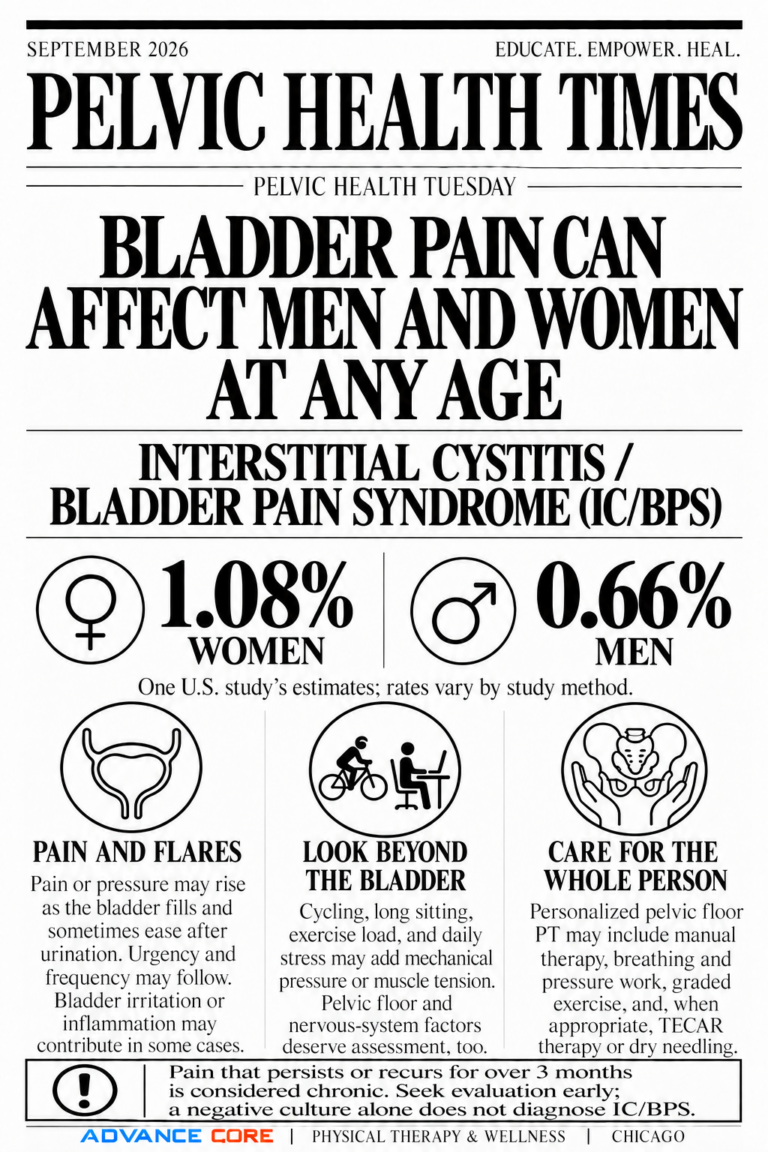
Bladder pain is often described as a women’s health issue. Yet interstitial cystitis/bladder pain syndrome (IC/BPS) can affect men and women across adulthood. In one U.S. study that combined medical-record review with statistical adjustment, the estimated prevalence was 1.08% in women and 0.66% in men. These are estimates, not a diagnostic test: other studies have reported different rates depending on how symptoms and diagnoses were counted.[1]
What does bladder pain feel like?
IC/BPS may involve pain, pressure, or discomfort perceived around the bladder along with urinary urgency or frequency. For some people, discomfort increases as the bladder fills and eases after urination. Others have a different pattern. Symptoms may fluctuate, and a flare can disrupt work, sleep, exercise, intimacy, and daily plans.
A negative urine culture is useful information, but it does not by itself establish IC/BPS. Urinary tract infections and other possible causes of pelvic or bladder pain need appropriate medical evaluation. The American Urological Association describes IC/BPS as bladder-related unpleasant sensation with lower urinary tract symptoms lasting more than six weeks, in the absence of infection or another identifiable cause.[2]
Look beyond the bladder
There is no single explanation for every person’s pain. Some patients notice that cycling, prolonged sitting at a desk, changes in exercise load, certain foods or drinks, or periods of stress coincide with symptoms. These are personal observations, not proof that any one activity or food caused IC/BPS. Research on flares shows that reported triggers differ between individuals.[3,4]
The assessment should consider how the pelvic floor muscles, hips, abdomen, breathing, posture, and movement respond to daily demands. Mechanical pressure or muscle tenderness may contribute in some people. Pain processing and nervous-system sensitivity can also be relevant, especially when symptoms persist. Bladder irritation or inflammation may play a role in certain cases, but it should not be assumed to explain everyone’s symptoms. These possibilities need to be weighed alongside the medical evaluation.
When should you ask for help?
You do not need to wait five or six months. Pain that persists or recurs for more than three months is generally classified as chronic pain, but an earlier evaluation can identify treatable contributors and help you make informed decisions.[5] New or worsening urinary symptoms, especially with fever, visible blood in the urine, or trouble passing urine, warrant prompt medical attention.
How can pelvic floor physical therapy help?
The starting point is an individualized assessment, not a preset exercise list. When pelvic floor tenderness is present, appropriately trained manual physical therapy is recommended as an option in the AUA guideline. In a randomized trial involving women with IC/BPS and pelvic floor tenderness, more participants reported meaningful overall improvement after myofascial physical therapy than after general therapeutic massage. That finding supports careful patient selection; it does not promise the same result for everyone.[2,6]
At Advance Core Physical Therapy & Wellness, a plan may include gentle manual care, breathing and pressure coordination, postural and movement strategies, and graded therapeutic exercise. Depending on the assessment and individual goals, abdominal or visceral mobilization, TECAR therapy, or dry needling may be considered as supportive options. Evidence specific to IC/BPS for these adjuncts is limited, so we do not present them as cures or replacements for medical care. Treatment is adjusted to the person’s response and coordinated with other clinicians when needed.
If bladder or pelvic pain keeps returning, you deserve a careful evaluation and a plan that fits your symptoms, your activities, and your goals.
Advance Core Physical Therapy & Wellness | Chicago
References
- Anger JT, et al. National prevalence of IC/BPS in women and men utilizing Veterans Health Administration data. Frontiers in Pain Research. 2022. https://pmc.ncbi.nlm.nih.gov/articles/PMC9448885/
- American Urological Association. Diagnosis and Treatment of Interstitial Cystitis/Bladder Pain Syndrome (2022). https://www.auanet.org/documents/Guidelines/PDF/IC_BPS_8.30.22.pdf
- Lai HH, et al. Management of symptom flares and patient-reported flare triggers in IC/BPS. Urology. 2019. https://pubmed.ncbi.nlm.nih.gov/30682464/
- Sutcliffe S, et al. A case-crossover study of urological chronic pelvic pain flare triggers. Journal of Urology. 2018. https://pubmed.ncbi.nlm.nih.gov/29288643/
- International Association for the Study of Pain. Definitions of chronic pain syndromes. https://www.iasp-pain.org/advocacy/definitions-of-chronic-pain-syndromes/
- FitzGerald MP, et al. Randomized multicenter clinical trial of myofascial physical therapy in women with IC/BPS and pelvic floor tenderness. Journal of Urology. 2012. https://pubmed.ncbi.nlm.nih.gov/22503015/