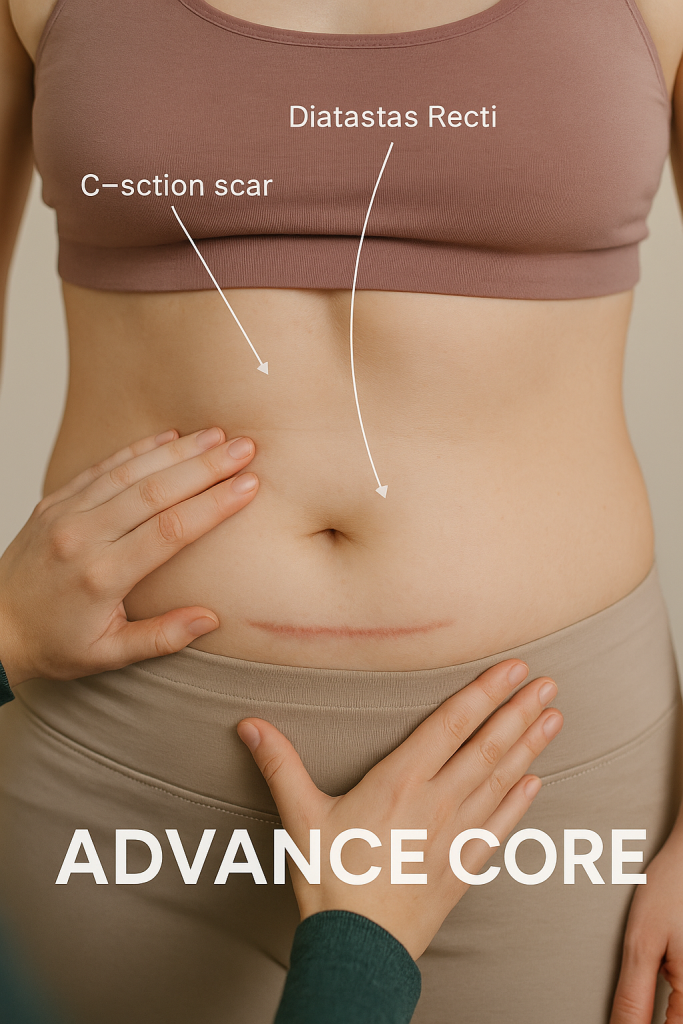
A Cesarean birth is life-changing, but recovery often comes with unique challenges. Many women feel disconnected from their lower abdomen and avoid touching their scar, worried it might hurt or reopen. This fear can slow healing, cause stiffness, and lead to issues such as pain, bladder or bowel changes, and difficulty moving.
When to Start C-Section Scar Care
Gentle scar care can begin as early as 3–4 weeks postpartum, not just at 6–7 weeks. Early attention helps improve:
- C-section scar mobility and flexibility
- Blood flow and collagen production for better healing
- Abdominal strength and core function
- Prevention of diastasis recti (DRA) and pelvic floor dysfunction
Ignoring the scar may lead to tight, immobile tissue, skin color changes, and ongoing fear of movement.
Effective Therapies for C-Section Recovery
At Advance Core Physical Therapy in Chicago, many women notice improvements after the first session. Our postpartum therapy may include:
- TECAR therapy for C-section scars: increases circulation, reduces pain, and supports natural healing
- Gentle manual scar release: improves mobility and reduces sensitivity
- Postpartum breathing and core training: helps restore pressure balance, supports bladder control, and promotes faster recovery
Diastasis Recti vs. Postpartum Hernia
It’s common for women to notice a “bulge” in their abdomen after pregnancy or C-section—but not all bulges are the same.
- Diastasis Recti (DRA): This is a separation of the abdominal muscles along the midline. It feels like a gap or ridge, especially when lifting your head or doing certain movements. DRA is common, and with the right exercises, breathing, and scar care, it often improves.
- Hernia: A hernia occurs when tissue (such as fat or intestine) pushes through a weak spot in the abdominal wall. Unlike DRA, a hernia may cause pain, pressure, or a visible lump that does not go away. Some hernias require medical evaluation or surgery.
The key difference: DRA is about muscle separation and pressure control, while a hernia is tissue pushing through a defect. A physical therapist can help you identify which one you’re experiencing and guide you safely.
Scar Massage and Exercises at Home
With the right guidance, women can safely begin:
- Gentle C-section scar massage to reduce fear and improve mobility
- Breathing techniques for core recovery
- Safe postpartum exercises to support stability and healing
Reconnect With Your Body After Birth
C-section recovery is about more than healing a scar—it’s about rebuilding trust with your body. Touching, moving, and caring for the scar area helps women reduce fear, improve function, and feel strong again.
If you’re looking for C-section scar therapy in Chicago, Advance Core Physical Therapy is here to help you make friends with your body again.