Dr Daniela Moise, DPT/ advancecoretherapy.com
Many moms wonder how to get rid of the belly separation or ‘baby pooch’ they notice after pregnancy. One popular tool is the abdominal binder for diastasis recti — but is it right for everyone?
Using an abdominal binder for diastasis recti can help with core stability after pregnancy — but it’s not enough on its own. Your breathing patterns, posture, and pelvic floor strategy must all align for real, lasting healing. In this post, we’ll break down how your body’s natural breathing type (chest vs. belly), voice control, and muscle coordination can affect your outcome.
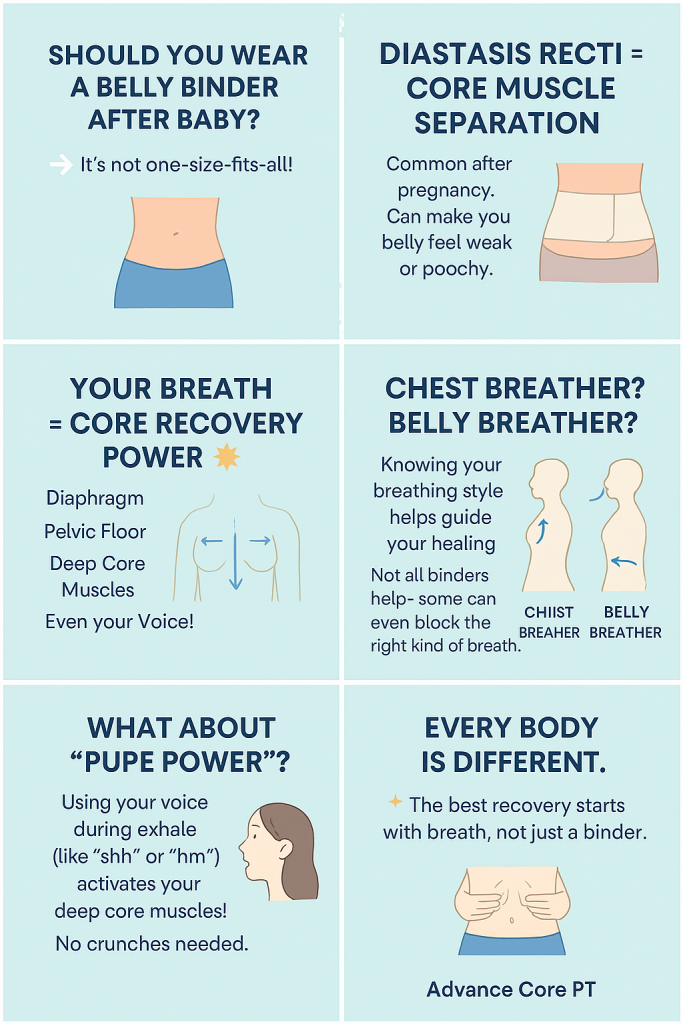
If you’ve heard about binders or corsets for diastasis recti, you might be wondering: Do I really need one? The answer isn’t one-size-fits-all. Whether a binder or corset will help depends on several key factors unique to your body.
1. What Kind of Breather Are You?
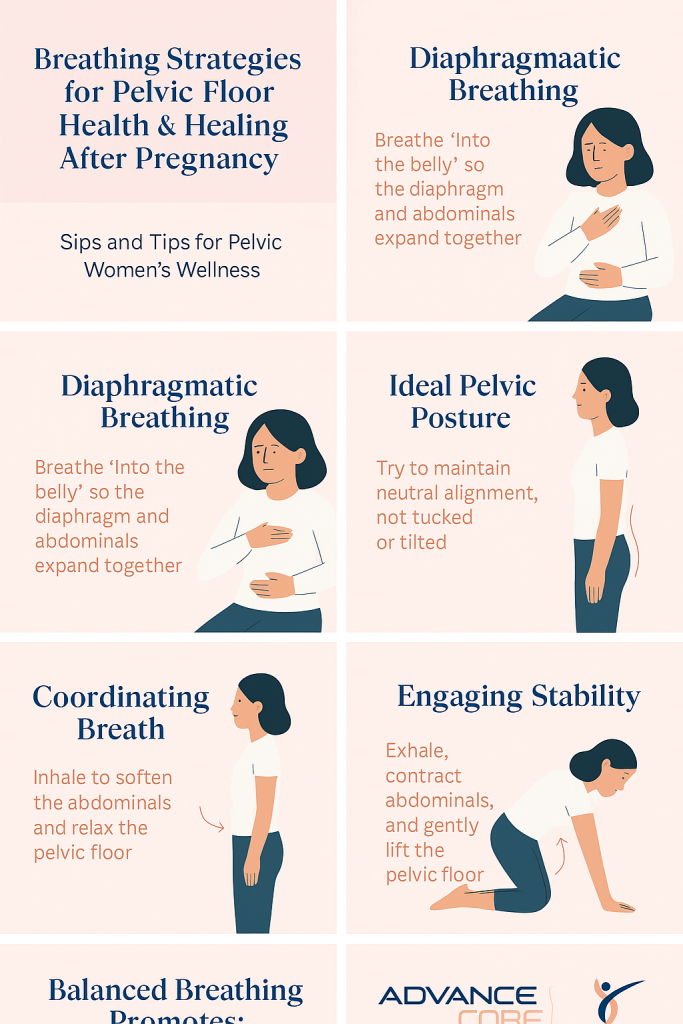
Your breathing style—whether you breathe deeply into your belly, shallowly into your chest, or tend to hold your breath—affects your core and pelvic floor function. A binder can support your core better if your breathing pattern isn’t fully engaging the diaphragm and pelvic floor together.
2. What Pelvic Floor Issues Do You Have?
Pelvic floor dysfunction varies. Some people have tight, overactive muscles (often called “blade” issues), while others have weak or underactive muscles (sometimes called “GO” issues). A binder or corset may help stabilize and protect your core differently depending on your pelvic floor’s condition.
3. What Is Your Posture Like?
Poor posture—such as forward head, rounded shoulders, or swayback—can strain your core and pelvic floor. A binder might help support your abdominal wall while you work on improving posture to reduce pressure on your pelvic floor and diaphragm.
4. How Strong Is Your Voice?
Your voice is surprisingly connected to your core and breathing. If you find your voice weak or strained, this might indicate an imbalance in breath support and core stability that a binder could help address temporarily while you retrain your muscles.
5. Don’t Forget Constipation
Constipation can increase pressure on your pelvic floor and abdominal muscles, worsening diastasis recti and pelvic dysfunction. Addressing constipation through diet, hydration, and pelvic floor exercises is essential and can affect whether a binder is the right support for you.
How We Can Help at Advance Core Physical Therapy
Choosing the right support for diastasis recti is a personal journey. At Advance Core Physical Therapy, we provide thorough assessments of your breathing, pelvic floor function, posture, and voice to determine what your body truly needs. Our goal is to empower you with personalized care, including exercises, education, and, when appropriate, recommendations for binders or corsets to safely support your core.
If you’re dealing with diastasis recti or pelvic floor concerns, don’t hesitate to reach out. Together, we can create a plan tailored just for you.
If you’re unsure what type of breather you are, schedule an assessment with our team.
Learn more about diastasis recti from the Mayo Clinic.
Mayo Clinic – Diastasis Recti: https://www.mayoclinic.org/
ACOG – Postpartum Recovery: https://www.acog.org/